Does a Barrel Sauna Add Value to Your Home?

A backyard barrel sauna rarely shows up as a specific line item on a formal appraisal, but real estate agents in colder and wellness-oriented markets report it can help a listing stand out and, in some cases, support a modestly faster sale. Most owners should not expect to recoup the full installed cost at resale, similar to how a pool or an outdoor kitchen typically returns a portion of what was spent on it rather than the whole amount.
How Appraisers Actually Treat a Backyard Sauna
Standard appraisal software is built around comparable sales data pulled from a regional database, and that database rarely has a dedicated field for a sauna the way it does for square footage, bedroom count, or a garage. In practice, an appraiser is more likely to note a sauna as part of a general “outdoor amenities” adjustment alongside a deck, a fire pit, or landscaping, rather than assign it a specific dollar value the way a finished basement or an added bathroom would get counted. A pool or a well-documented outdoor kitchen typically pulls more weight in that adjustment than a sauna does, simply because appraisers see more comparable sales data for those features. Homeowners hoping the appraisal itself will reflect what a sauna cost to install are usually better served thinking of it as a lifestyle purchase first, with any resale bump treated as a secondary bonus rather than the main reason to buy one.
What Real Estate Agents Say Buyers Actually Respond To
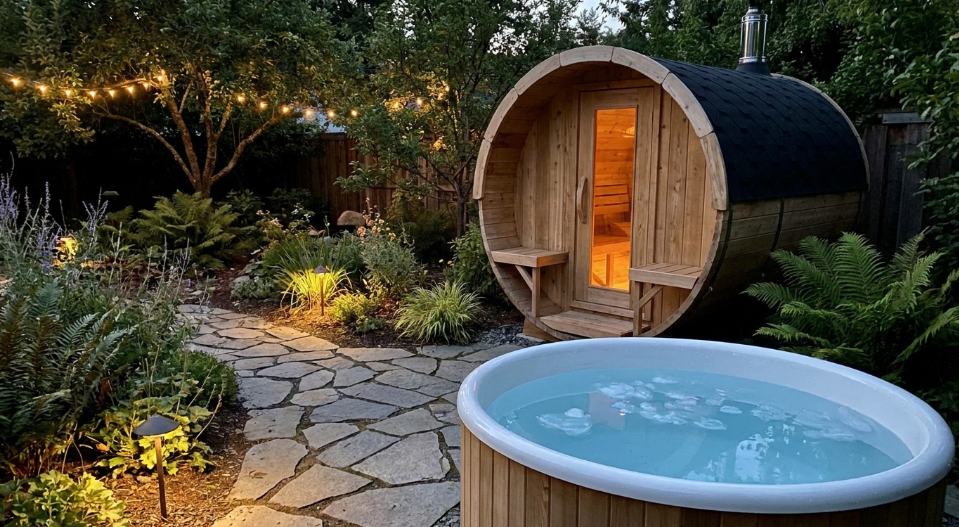
Agents working listings with an existing sauna commonly describe it as a conversation starter during a showing rather than a line item buyers negotiate over directly. In markets with real winters, a well-built barrel sauna photographs well and can help a listing get noticed online, which matters in a market where most buyers filter listings by photo before ever scheduling a walkthrough. The effect tends to be strongest when the sauna looks maintained and intentional, built on a proper pad with clean sightlines from the house, rather than tucked into an overgrown corner of the yard where it reads as clutter instead of an amenity. Staging a listing photo with the sauna door open and a stack of towels nearby, rather than photographing it closed and empty, is a small detail agents mention that noticeably changes how the space reads to someone scrolling listings online.
What the Math on Recouping Cost Actually Looks Like
Outdoor recreational features as a category, saunas, hot tubs, and similar additions, generally recoup a portion of installed cost rather than the full amount, in line with how most discretionary home improvements perform at resale. A barrel sauna installed for $6,000 to $9,000 all in is unlikely to add that full figure to a sale price on its own. Before spending at the higher end of that range purely for resale value, it is worth pricing tiers against each other, since a mid-range unit often delivers most of the buyer appeal a top-tier model does. Sites that let you compare models here across price points, rather than shopping a single listing in isolation, make it easier to right-size the investment to what a given market is likely to actually reward.
Which Markets Actually Value a Sauna More Than Others
Geography does a lot of the work here. In regions with long, genuinely cold winters and an established wellness culture, particularly parts of the upper Midwest and Pacific Northwest, a sauna reads as a normal, expected amenity rather than a novelty, and buyers in those markets are more likely to factor it into their impression of a property. In warmer climates where saunas are less common, the same structure can read as unfamiliar or even as extra maintenance a buyer does not want to inherit, which can mute or even slightly work against the intended effect. Suburban and semi-rural properties with enough yard space to set the sauna apart from the house also tend to fare better than tight urban lots, where the same structure can feel like it is competing with limited outdoor living space rather than adding to it.
Why Buyers Actually Want One in the First Place
Buyer interest in a sauna is not purely aesthetic. Research on regular sauna use has found bathing frequency associated with lower rates of fatal cardiovascular and all-cause mortality in large Finnish cohort studies, an association summarized in a 2018 review in Mayo Clinic Proceedings. A separate review in The American Journal of Physiology looked broadly at the effects of heat and cold exposure on the body and reached similar conclusions about regular use. An older review in The American Journal of Medicine outlined both the benefits and the known risks of sauna bathing. These are population-level associations from observational research, not proof that installing a sauna changes any individual buyer’s health outcome, but the underlying interest in home wellness features is real and shows up consistently in how agents describe buyer reactions during showings.
When a Sauna Can Actually Hurt Resale Instead of Helping
Neglect is the biggest risk. A shell that has gone gray and untreated, a door seal that has cracked and let moisture in, or visible rot at the base reads to a buyer as deferred maintenance, the same way a peeling deck or a rusted fence does. That impression can prompt a lower offer or a request for repair credits even when the sauna was never the primary reason someone was interested in the house. Regular cleaning and resealing every one to two years keeps the structure from becoming a liability instead of the amenity it was meant to be.
Frequently Asked Questions
Do appraisers add value for a backyard barrel sauna? Rarely as a specific line item, since most appraisal software lacks a dedicated field. It usually gets folded into a general outdoor amenities adjustment, if counted at all.
Will a barrel sauna help a house sell faster? It can differentiate a listing, especially in colder or wellness-focused markets, but agents describe it as helping a house stand out rather than reliably shortening time on market alone.
Does a sauna recoup its full cost at resale? Almost never dollar for dollar. It typically recoups a portion of installed cost, similar to other outdoor recreational features.
Does a poorly maintained sauna hurt resale value? It can. Visible weathering or rot signals deferred maintenance and can prompt a lower offer even if the sauna was not the main selling point.
References
- Cardiovascular and Other Health Benefits of Sauna Bathing: A Review of the Evidence, Mayo Clinic Proceedings, 2018
- Effects of heat and cold on health, with special reference to Finnish sauna bathing, American Journal of Physiology, 2018
- Benefits and risks of sauna bathing, The American Journal of Medicine, 2001